


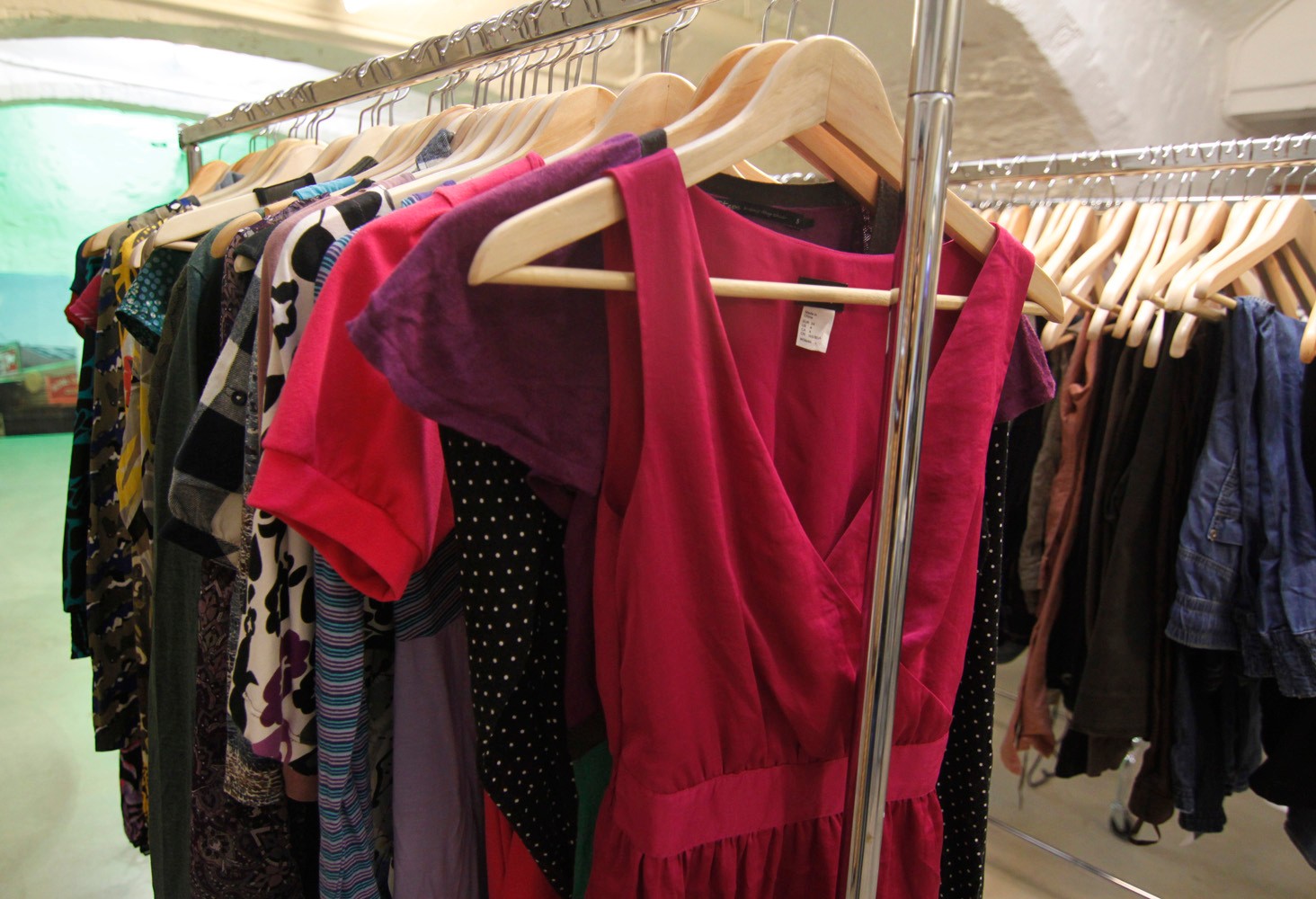
Sustainable fashion is no longer just a trend headline. It is, in fact, a transformation that directly concerns the wardrobes of consumers in Turkey. What’s more, it also concerns the production lines of ready-to-wear exporters. On one side are the Zero Waste (Sıfır Atık) initiatives of the Ministry of Environment, Urbanisation and Climate Change, which cover textile work and clothing collection points. On the other side are the European Union’s new rules on textile products. In this feature, therefore, we look at second-hand, recycling and local production. We have compiled what official institutions and industry bodies have to say.
The scale of the problem: why now?
The European Commission’s textiles strategy page offers a ranking. According to the page, textile consumption in the EU has the fourth-highest impact on the environment and climate, behind only food, housing and mobility. According to the same source, around 5 million tonnes of clothing are thrown away in the EU every year. That works out at around 12 kilograms per person. Moreover, only 1 per cent of the material in clothing can be turned back into clothing. The Commission also shares an employment figure: every thousand tonnes of textiles collected for reuse creates 20 to 35 jobs.
On the Turkish side, in August 2026 the Ministry made “textile waste” the monthly theme of its Zero Waste project. As reported by Türkiye Gazetesi, producing a single T-shirt uses around 2,700 litres of water. The Ministry drew attention to this. It also offered citizens 10 recommendations for preventing textile waste at source. Furthermore, the Ministry stressed that reusing or recycling reduces the consumption of water, energy and raw materials.
Second-hand and reuse: starting with the wardrobe
The shortest route to sustainable fashion is to wear existing clothes for longer. Repairing, altering, swapping, buying second-hand or donating consumes fewer resources. Making a new product always requires more. The Ministry’s campaign frames its call in that order too: first prevent waste from being created, then extend the product’s life.
On the collection side, a new link was added to the chain in July 2026. According to a report in Sabah, the Zero Waste Foundation and PTT (the Turkish postal service) began collecting unused clothing. To do so, they placed “Clothing and Textile Bins” in their branches. According to the report, teams log the items handed in. Then, at processing centres, they sort them by type, fabric and condition and disinfect them. Foundation President Samed Ağırbaş set out two goals. Clothing in usable condition will be passed on to people in need in coordination with the Ministry. Items that cannot be used, by contrast, will be recycled. Finally, a website showing the nearest bin has also been launched.
For readers, a practical order looks like this. Send pieces you no longer wear but that are still in good shape first to a swap or the second-hand market, then to donation. Send worn-out items to the bins. The bins collect them separately. That’s because textiles that end up in mixed rubbish lose both their value and their chance of being recovered.
Recycling and Europe’s new rules
For the Turkish ready-to-wear industry, the centre of gravity in the sustainability conversation is Brussels. The sustainability page of the İstanbul Apparel Exporters’ Association (İHKİB) states that the EU is the industry’s most important export market. According to the page, the European Green Deal came onto the agenda in 2019. This launched a new transformation process for manufacturers. The association addresses this transformation along three axes: sustainability management, sustainability in production and sustainability in the supply chain.
The timeline on the EU side is also becoming increasingly concrete. The Commission adopted the Strategy for Sustainable and Circular Textiles on 30 March 2022. The strategy’s 2030 vision aims for textile products on the EU market to be durable, repairable and recyclable. The vision also aims for these products to be made largely from recycled fibres. Making fast fashion “out of fashion” is even among the goals. In addition, the Commission proposed an amendment in July 2023. The amendment provides for mandatory, harmonised extended producer responsibility schemes for textiles in all member states. A ban on destroying unsold textile and footwear products has come into force. For large companies, the date is 19 July 2026. For medium-sized companies, by contrast, the start date is 19 July 2030. Finally, the Digital Product Passport, which will carry product information, is also among the strategy’s tools.
These rules are aimed directly at companies in the EU. However, they can mean new expectations for Turkish suppliers selling products into the EU. These expectations concern design, labelling and traceability. On its page, İHKİB also reports that it has prepared a Sustainability Strategy and Action Plan. The aim is the industry’s alignment with the EU’s sustainability policies. It also states that it aims to achieve the green, digital and circular transformation on time.
Local production and the social dimension
Sustainability is not just a question of materials. Where a product is made, and under what conditions, is also part of the equation. İHKİB stresses that the industry must also take social factors into account for sustainability: workers’ rights, fair wages and good working conditions. Claims that are not misleading and are based on specific standards are also needed. These claims, it says, should encourage consumers to be more selective. In addition, the association highlights the eco-design approach. It also wants the entire life cycle to be taken into account, from raw material to the stage at which the consumer disposes of the product.
For consumers, this means reading the label and keeping a healthy distance from claims. General terms such as “eco-friendly” or “sustainable” prove nothing on their own. That’s why it is worth asking which materials are used, in what proportion and backed by which certification. Indeed, the regulations the EU has drawn up against greenwashing target exactly this gap.
Seen from Turkey
Turkey is at the table in sustainable fashion as both consumer and producer. On the one hand, the Ministry’s campaigns and clothing bins are trying to change habits on the wardrobe side. On the other, exporters’ associations are preparing for the EU’s new rules. Ultimately, these two tracks meet in longer-lasting products and more transparent production. You can find the season’s standout trends in our Autumn/Winter 2026-27 Trends feature. And you can also find the names bringing this transformation into their collections in our round-up of young Turkish designers.
Sources
- European Commission — EU Strategy for Sustainable and Circular Textiles
- İHKİB — Sustainability for Apparel Industry
- Türkiye Gazetesi — A zero waste push in textiles (3 August 2026)
- Sabah — A zero waste push from PTT (12 July 2026)
Image: Second-hand dresses and tops lined up on wooden hangers at a clothing swap event, waiting to be exchanged (representative image) — Little Green Dress, Wikimedia Commons, CC BY 2.0