



HIIT training combines short but intense work intervals with rest intervals, offering an efficient workout for those short on time. In this article you will find the logic behind the method and a sample programme you can do on the treadmill.
If you’re bored of running for hours on the treadmill and looking for a different, more enjoyable method, what you need is right here.
H.I.I.T: Short for “High Intensity Interval Training”, HIIT makes it possible to get in shape in a short space of time.
With HIIT you can both lower your body fat percentage and increase your muscle mass, for an even fitter body.
So what is HIIT, and how do you do it?
The training system consists of two phases: high and low. In the first phase, the principle is to push yourself to the maximum for a set period of time. Then, at low intensity, the pace is slowed down and you switch to recovery mode.
If your goal is to get rid of fat quickly and boost your performance, high-intensity training is just right for you. I can almost hear you saying: that all sounds great, but how exactly do we do this HIIT? Keep reading, then.
For beginners, a 15-minute workout is enough.
How is HIIT different from aerobic exercise?
It is true that you burn calories during aerobic exercise. But with HIIT, you burn far more calories as a reward for your metabolism speeding up throughout the day! In other words, a 20-25 minute workout pays you back with a faster metabolism and a fat-free stomach and waistline.
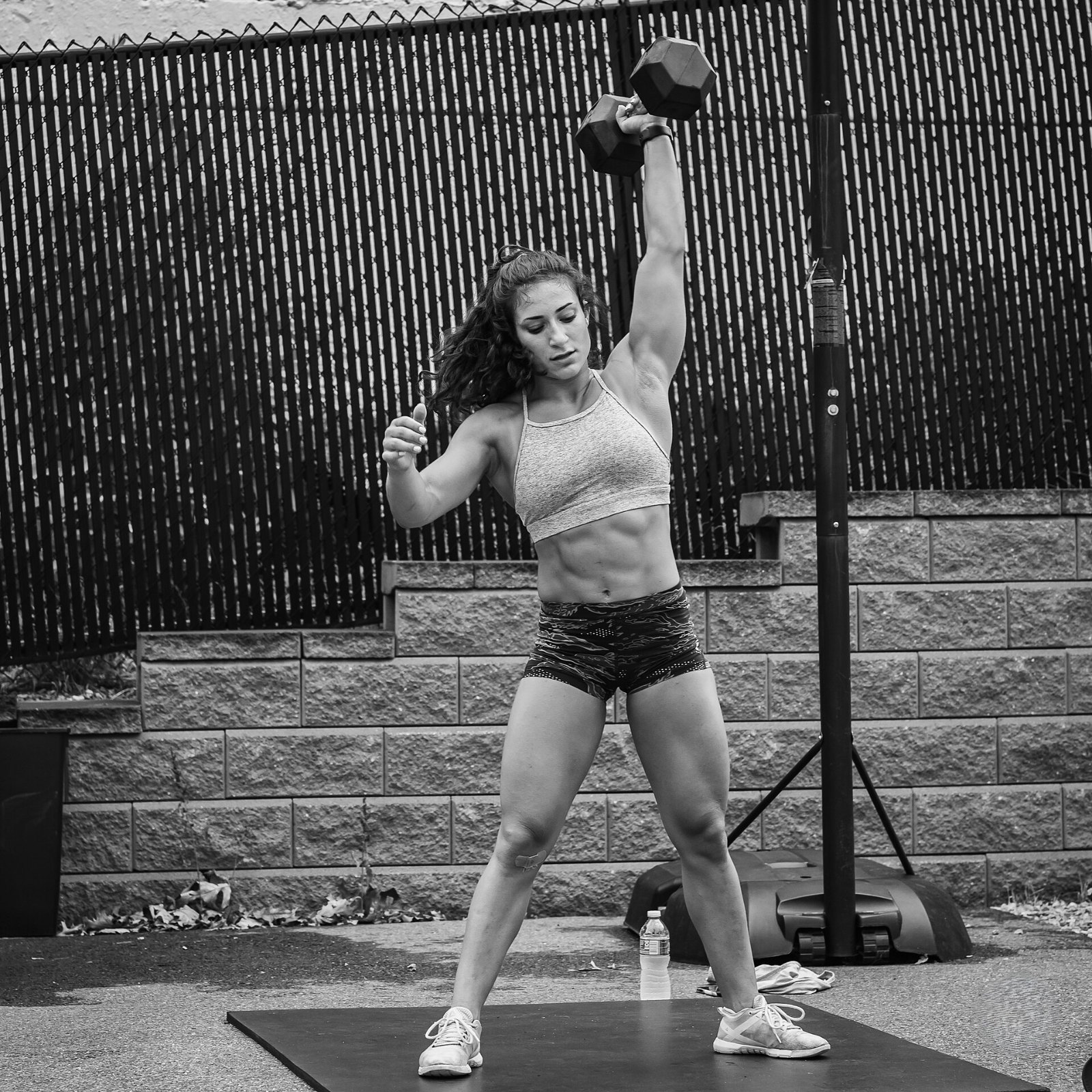
Image: A female athlete doing a HIIT workout with a dumbbell (black and white) — Kiet Le, Wikimedia Commons, CC BY 2.0
A sample HIIT PROGRAMME
you can do on the treadmill
First, warm-up 0-5 (min) speed: 5.5 incline 2
5-6 (min) speed: 8.2 incline 0
6-7 (min) speed: 6.0 incline 0
7-8 (min) speed: 8.2 incline 0
8-9 (min) speed: 6.0 incline 0
and finally, cool-down
9-15 (min) speed: 5.5 incline 2
As you can see, 1 set lasts 2 minutes.
By adding HIIT to the end of your weight training sessions, you can take fat burning to the next level. As the weeks go by, it is up to you to increase the number of sets and raise or lower the intensity. Also, to minimise the risk of injury, try not to keep your recovery time shorter than your running time, and limit HIIT to a maximum of 3 days a week. Never forget that you will get the best results with a programme that suits you!
In fact, a study carried out in Australia found that women who did 20 minutes of HIIT lost 6 times more fat than women who did 40 minutes of cardio on the treadmill.
So now you know better how to get rid of the fat in your body. Try HIIT and see for yourself. You won’t regret it!
See you again next week.
Stay sporty. Goodbye.
Contact: [email protected]
What to keep in mind when doing HIIT training
High-intensity workouts put a serious load on the body in a short time. That is why every session should start with a warm-up of a few minutes and end with a cool-down at an easy pace. For beginners, two or three sessions a week is generally enough; giving your muscles time to recover between sessions reduces the risk of injury.
- First of all, if you have heart, blood pressure or joint problems, be sure to consult your doctor before starting.
- Raise the intensity by gradually increasing speed and incline, not duration.
- Finally, drink plenty of water and avoid heavy meals before training.
For those who want to build muscle strength alongside HIIT training, our article on weight training for women is a good complement. For the scientific background of the method and its different forms, see the high-intensity interval training entry on Wikipedia.