


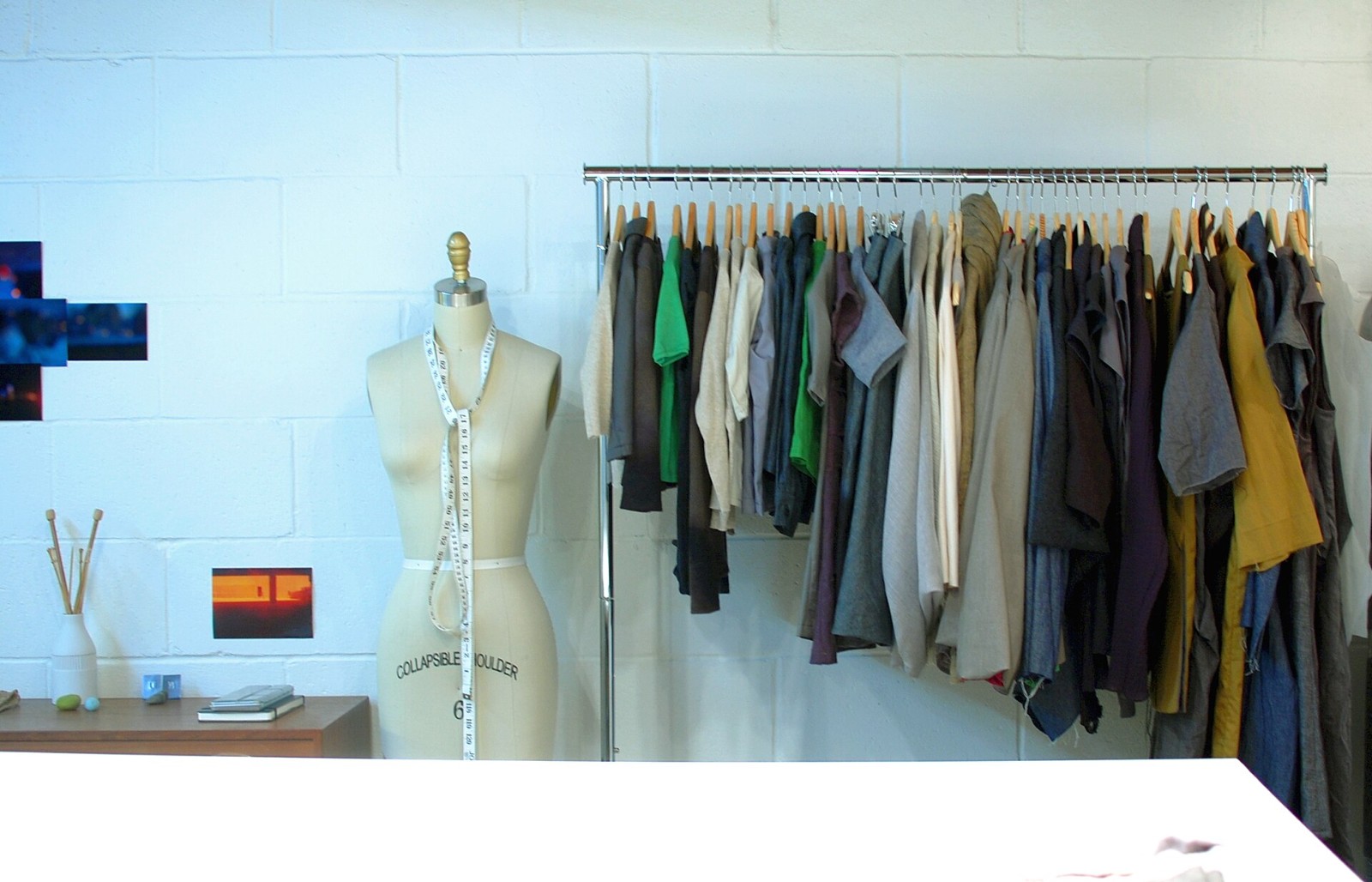
Two separate stories stood out in the fashion business world in the same week. It emerged that Budapest-born label Nanushka has closed all of its own stores. The brand has sat down with investors and creditors in order to survive. In Milan, meanwhile, investment firm Style Capital made an announcement on 2 November 2026. The firm has acquired a majority stake in N°21, the label founded by Alessandro Dell’Acqua. The two developments are not connected. Read side by side, however, they paint a picture: mid-sized designer brands today stand on fragile ground.
Nanushka: a brand without stores
The news was first broken by Hungarian business magazine HVG. The details were reported by 444.hu, Budapester Zeitung and Italian trade publication Pambianco. According to these sources, the brand’s stores in Shanghai and New York closed over the past year and a half. In addition, its London store closed in February, and its Budapest store and the café attached to it closed in June. As a result, the label founded by Sandra Sándor no longer has a single physical retail location of its own.
The downsizing, however, is not limited to the stores. According to the Hungarian press, headcount has fallen from more than 150 to around 20 people. There have also been delays in salary and severance payments. The company closed the financial year from 1 April 2024 to 31 March 2025 with a loss of 12.2 billion forints, as reported by the Hungarian press. Furthermore, 44 enforcement proceedings have been launched against the company since 2023, four of which are still ongoing, according to the reports.
The ownership side is complicated too. According to 444.hu, a transaction was carried out over the collateral on a 10-million-euro loan. This transaction turned into a legal dispute over control of the brand. According to Pambianco, the company’s management confirmed this information to Business of Fashion. Management also said that a resolution depends on the outcome of ongoing restructuring talks. In a statement to the Hungarian press, the company had acknowledged delays in payments, but stressed that demand for the brand and its products had not declined.
The sources do not fully agree on sales channels. Hungarian outlets write that sales continue mainly online and through retailers. Pambianco, by contrast, reports that the e-commerce site is currently inaccessible. It also reports that the company has temporarily halted sales of new collections to wholesale partners. According to the same report, the aim is to return to wholesale with the sales campaign for the Autumn-Winter 2027 season once the business has been stabilised.
N°21: Gilmar exits, Dell’Acqua stays
The news from Italy, by contrast, is a more orderly handover. According to Milano Finanza, Montenapo Daily and il Mitte, Style Capital has bought a majority stake that gives it control of N°21. Roberta Benaglia is Style Capital’s co-founder and managing partner. The price was not disclosed. Meanwhile, the brand’s long-standing industrial partner Gilmar is exiting the brand with this transaction. According to Milano Finanza, Gilmar applied to the court of Rimini on 7 October, thereby launching the negotiated crisis settlement procedure under Italian law.
For the creative side, the most important detail is this: founder Alessandro Dell’Acqua will continue in his role as creative director, and his creative independence will remain intact. Benaglia described the brand as one of the most authentic expressions of contemporary Italian creativity: “N21 rappresenta una delle espressioni più autentiche e riconoscibili della creatività italiana contemporanea”. Dell’Acqua, for his part, said he sees the deal as an important opportunity for the brand’s growth.
According to Montenapo Daily, N°21 is stocked at more than 250 wholesale doors worldwide. It also has stores in Milan’s fashion quadrilateral (the Quadrilatero) and in Tokyo’s Ginza district. Style Capital’s portfolio includes brands such as Zimmermann, MSGM, Autry, Soeur, forte_forte, Re/Done and Essential Parfums. In other words, N°21 is passing to an investor focused on growing brands with a distinctive creative identity.
Why it matters
The two stories offer different answers to the same question: is a strong design language enough on its own to keep a brand afloat? Nanushka, after all, was a label that made it out of Budapest to open stores in New York, London and Shanghai. It was one of the standout stories of its era. Today, however, it has been left without stores under the weight of rent, staff and debt. N°21, by contrast, found a way. At a time when its industrial partner was struggling, it protected its designer by moving to a financial partner.
Seen from Turkey, the picture is a familiar one. For local designer brands hoping to expand abroad, three things matter: the pace of store investment, the wholesale network and choosing the right partner. All of them are at least as decisive as the collection itself. We have gathered the names making waves on the international stage in our young Turkish designers feature. And you can follow the season’s runway gatherings in our Fashion Week Calendar 2026–2027 guide.
What does the Nanushka case tell mid-sized brands?
For a designer brand, opening its own stores means both prestige and fixed costs. Rent, staff and inventory in particular can quickly become a heavy burden when sales slow. Nanushka being left without stores is a reminder of one thing: mid-sized brands that cannot strike this balance may be forced to turn to lighter models, such as wholesale, online stores and business partnerships.
The brand’s current collections are available on its official website. And for another strategic decision from the fashion business world, take a look at our article examining Victoria’s Secret’s Fantasy Bra decision.
Sources
- 444.hu — Minden boltját bezárta a Nanushka
- Budapester Zeitung — Modemarke in Bedrängnis
- Pambianco News — Il brand ungherese Nanushka in difficoltà
- Milano Finanza — Style Capital acquisisce il controllo di N21
- Montenapo Daily — Cambio al vertice per N°21
- il Mitte — Style Capital acquisisce il controllo di N°21
Image: Clothes on a rack and a dressmaker’s dummy in a design studio (representative image) — UNIFORM Studio, Wikimedia Commons, CC BY 2.0
