


The “PLANK” for Rock-Hard Abs and a Strong Body
Abdominal Muscles Would you like to work many muscle groups, above all your ‘ABDOMINAL MUSCLES’, using only your own body weight and without needing any equipment? Then this article is well worth reading!
The plank is one of the most effective exercises for strengthening the core. It also works the chest, shoulder, back and leg muscle groups isometrically, which means there is no change in the angle of the joint or the length of the muscle.
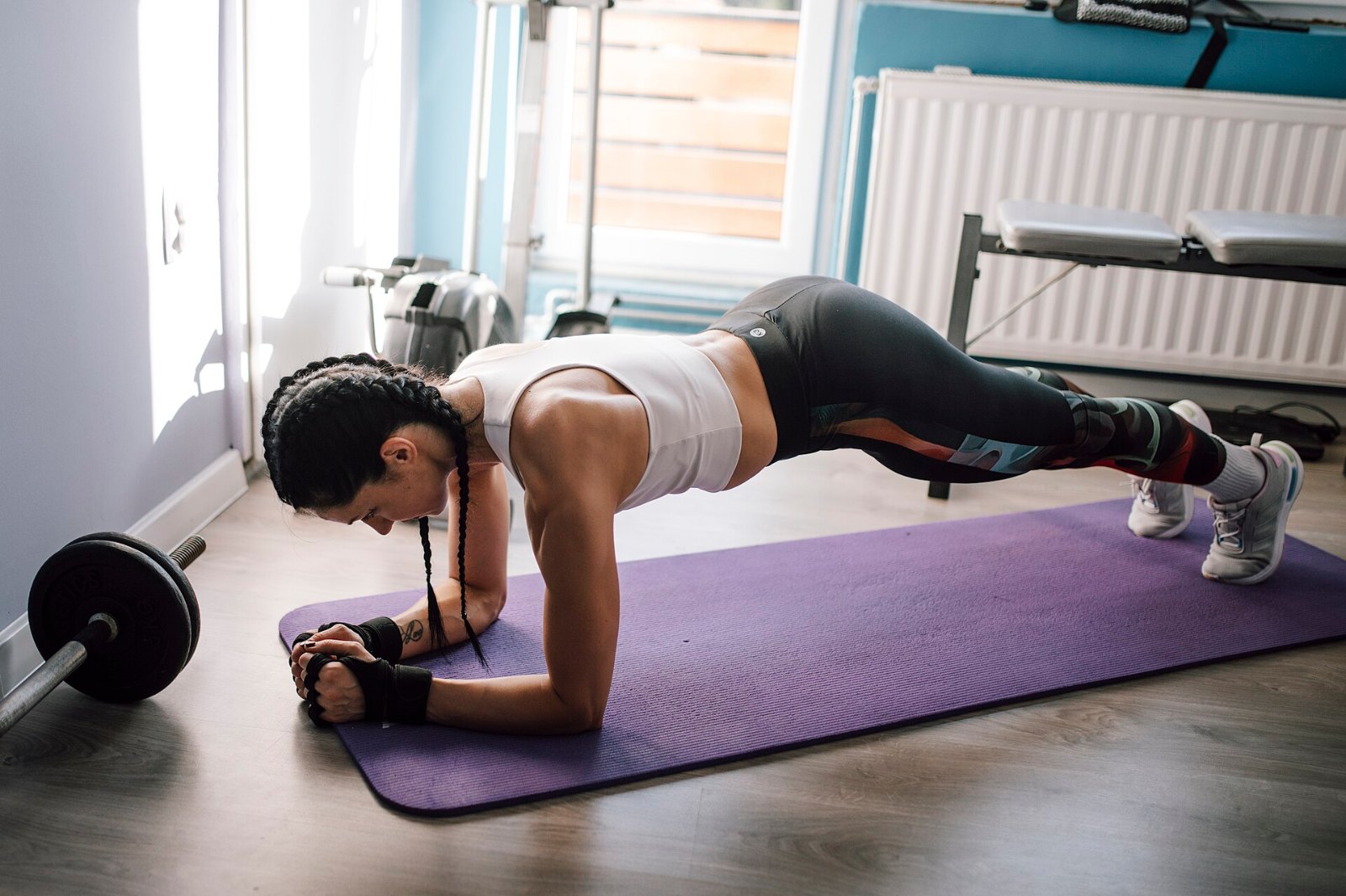
Image: A woman doing an elbow plank on a mat in a home gym (representative image) — Shixart1985, Wikimedia Commons, CC BY 2.0
Which muscles does the plank work?
To go into a little more detail, the main muscle groups it targets are the Rectus Abdominis (abs), the Transversus Abdominis and the Erector Spinae.
In addition, stabiliser muscle groups come into play as secondary muscles: the Trapezius, Rhomboids, Rotator Cuff, Anterior, Posterior and Medial Deltoid, Pectorals, Serratus Anterior, Gluteus Maximus and Quads.
In my view, the plank has several benefits that set it apart from many abdominal exercises.
*Targeting several muscle groups at once makes it stand out considerably from other abdominal exercises.
*It does not place extra load on the spine.
*It also provides flexibility along with stabilisation.
*In particular, it lets you work your abdominal muscles right down to the deepest muscles that support the spine.
*What’s more, it is effective for back pain.
*And it is one of the most beneficial exercises for correcting posture.
Abdominal Muscles
So how do you do a plank? Read on.
First, to begin the exercise, get into a push-up position on a flat surface. Then make sure your elbows are parallel to the floor and shoulder-width apart. Your shoulders should be directly above your elbows. Finally, in this position your body should be ‘as taut as a rope’; now squeeze your abdominal muscles as hard as you can.
Abdominal Muscles
What are the most common mistakes?
*First, make sure your hips don’t drop during the plank.
*Your hands should not be too close together.
*Finally, never hold your breath.
At beginner level, you can do 3 sets of 15 to 20 seconds. Increase the duration as you get stronger, and enjoy the plank..:)
Remember! A strong core
*Reduces the risk of injury.
*Takes sporting performance to the highest levels.
*Improves body control and balance.
I use many variations of the plank in my own training and in my private lessons. And the results are truly worth seeing!
Until my next article, stay sporty. Goodbye for now.