


Dice Kayek, founded by sisters Ayşe and Ece Ege, is back in London with a design that tells the story of Istanbul. The brand’s jacket “Hagia Sophia” features in the exhibition “From Constantinople to Istanbul: One City, Two Empires”, which opened at the Victoria and Albert Museum (V&A) on 7 November 2026. According to reports in the Turkish press, this design is the only work representing the present day in an exhibition that brings together around 200 objects.
What does the exhibition tell?
The exhibition explores the city’s transformation from the Byzantine era to the Ottoman period. According to reports, the selection also includes pieces on loan from Topkapı Palace, the British Museum, the Benaki Museum in Athens and the Sadberk Hanım Museum in Istanbul. The closing section of the exhibition is devoted to echoes of Byzantine mosaic art in London. Dice Kayek’s jacket stands in this section, as the link connecting the historical narrative to the present day.
There is another interesting detail. The piece entered the exhibition not through the museum’s dress and fashion collection, but through the selection prepared by its specialists in Islamic art. This shows that the design is seen as more than a garment — as an object that interprets the city’s artistic heritage.
The story of the design
“Hagia Sophia” comes from the brand’s 26-piece Istanbul Contrast collection. The V&A’s online collection record describes the piece as a hand-embroidered white satin jacket made in Paris in 2009, and lists Byzantine mosaics as its source of inspiration. According to the same record, Ayşe and Ece Ege donated the piece to the museum, where it is kept in the Middle East department under the number ME.1-2015.
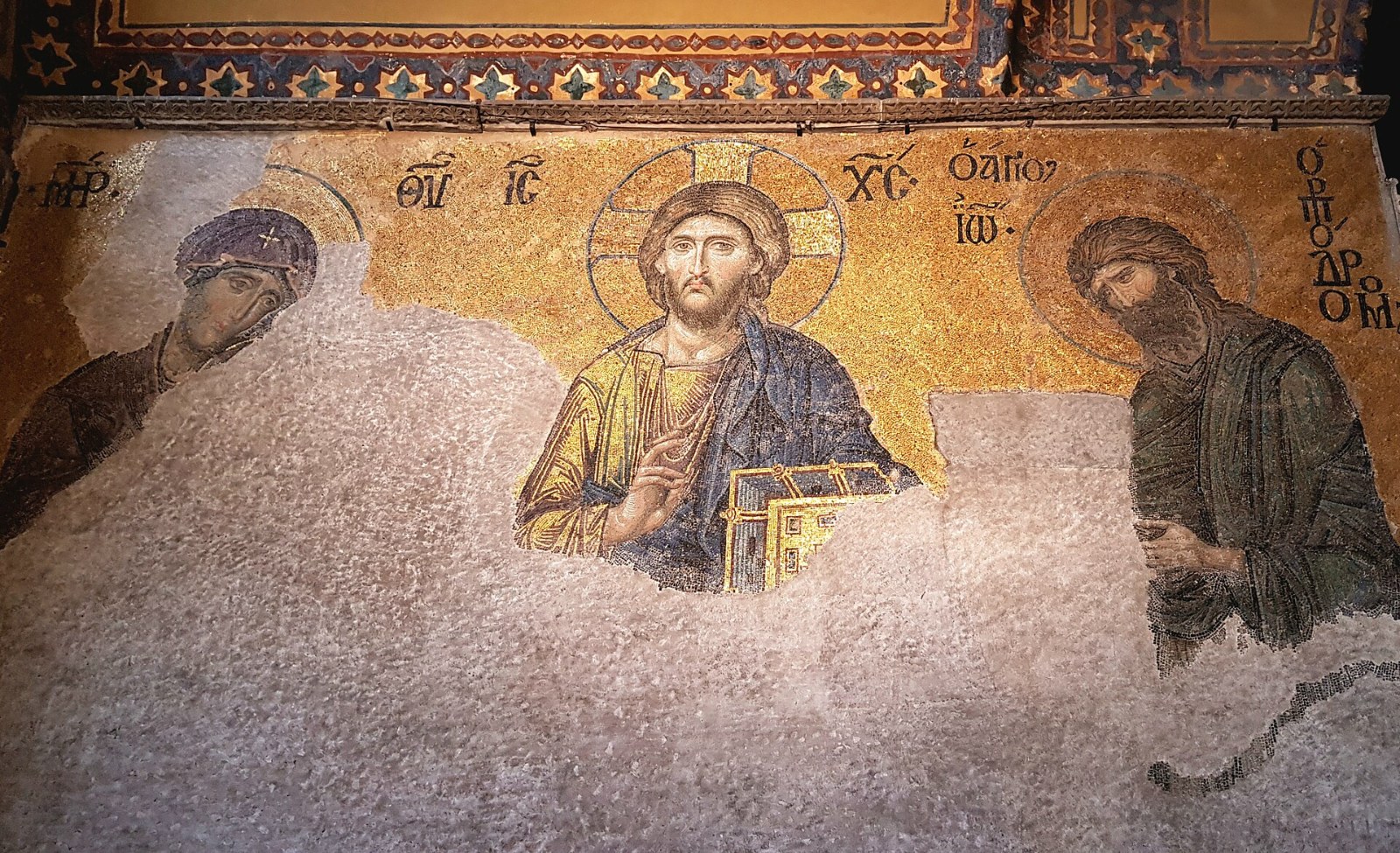
As reported by Euronews Türkçe, the graphic embroidery on the jacket references the wings of the Archangel Gabriel figure in the mosaics of Hagia Sophia. The embroidery was done by hand at the Maison Hurel atelier in Paris, and the embellishment features Murano glass beads dating from the 1920s. The piece took three months to complete. With its pronounced shoulder line and sculptural cut in particular, the jacket carries the geometry of the dome and arches onto the body.
A long relationship with the V&A
In fact, the relationship between Dice Kayek and the museum is not new. The Istanbul Contrast collection won the Jameel Prize 3 in 2013, the V&A’s award for contemporary art and design inspired by Islamic tradition. According to the brand’s own website, “Hagia Sophia” and two other pieces from the collection were shown at the museum as part of the prize exhibition, which ran from December 2013 to April 2014. Its return to the same galleries today therefore shows that the design has become a lasting reference.
Why it matters, seen from Turkey
International museums acquiring contemporary fashion pieces for their collections is a sign of lasting recognition for a designer. The Dice Kayek example in particular shows how Istanbul’s cultural heritage can resonate on the world stage when interpreted in a contemporary design language. We have gathered other names making their mark internationally in our feature on young Turkish designers. You can follow the season’s major fashion gatherings in our Fashion Week Calendar 2026–2027 guide.
For those who want to see the exhibition in London, opening hours and ticket information are published on the museum’s official website.
Dice Kayek and the inspiration of Istanbul
Dice Kayek, founded by sisters Ayşe and Ece Ege, is known for its designs. At the same time, it interprets the inspiration it draws from Istanbul through contemporary cuts. The “Hagia Sophia” jacket likewise carries the inspiration it takes from the mosaics of Hagia Sophia into the present through the language of tailoring. Being included in a museum exhibition shows that a fashion design is also regarded as a cultural document — in other words, that the design is not just the product of a single season.
You can follow the exhibition details and visitor information on the Victoria and Albert Museum’s official website. And for other Turkish designers who have found success internationally, take a look at our young Turkish designers feature.
Sources
- Harper’s Bazaar Turkey — Where Fashion Meets History
- Euronews Türkçe — Dice Kayek design inspired by Hagia Sophia to be exhibited at the V&A
- V&A Collections — Hagia Sophia (ME.1-2015)
- Dice Kayek — Istanbul Contrast
Image: The Deesis mosaic in the south gallery of Hagia Sophia — Ywpark2003 Prof. Yong Woo Park, Wikimedia Commons, CC0