


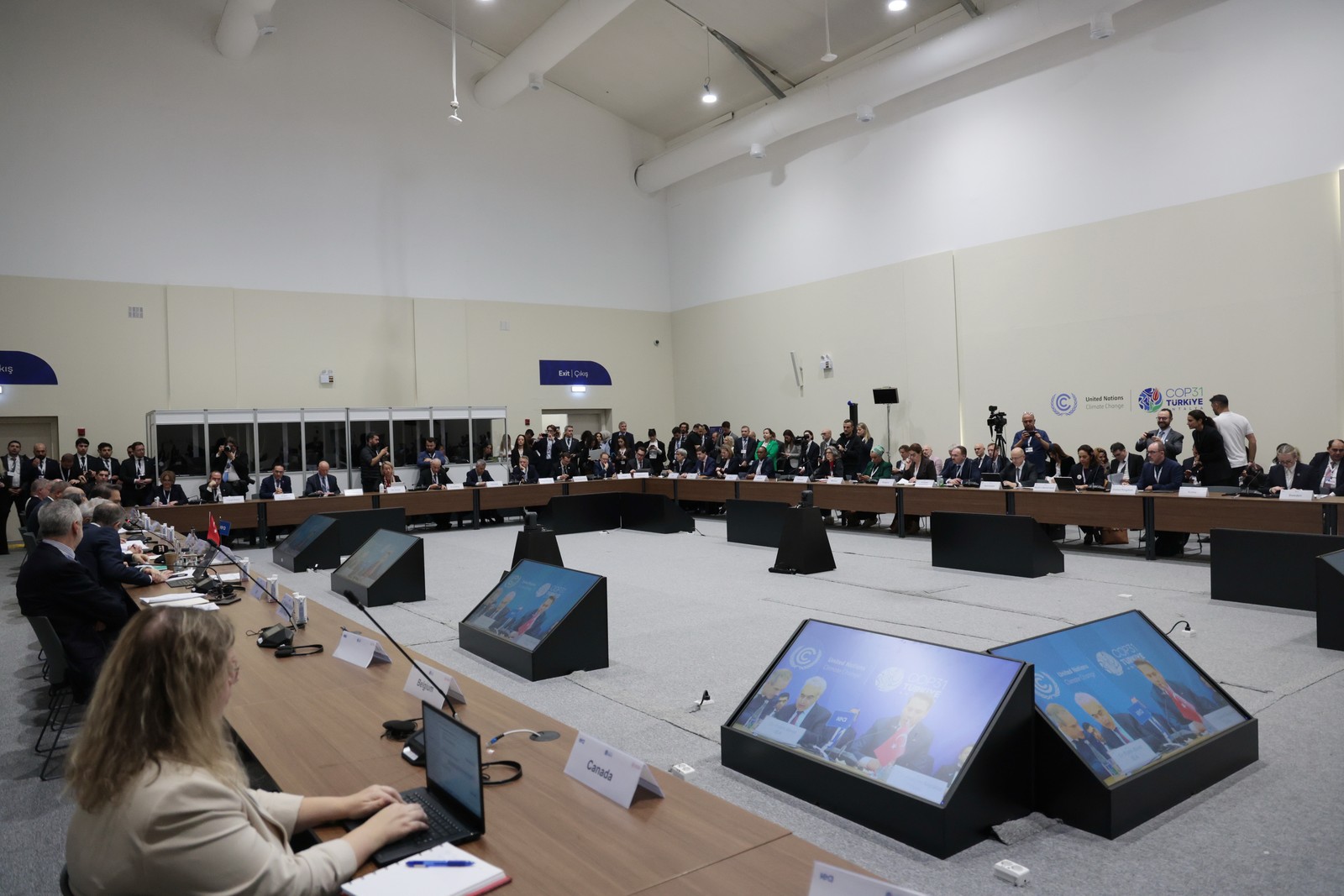
As the United Nations Climate Change Conference COP31 took place in Antalya in November 2026, fashion also claimed its seat at the table. On 9 November, Vogue Türkiye hosted a panel titled Designing the Future Together: Digital Transformation, Fashion and Sustainability at the conference’s Climate Finance Hub. Sponsored by Türk Telekom, the session brought next-generation materials, traditional craftsmanship and large-scale production into a single conversation. Details of the panel were published on 19 November by Sabah, Fuar Dergisi and Patron Rehberi; the topic was also on the agenda of GQ Türkiye and Vogue Türkiye.
The session was moderated by Vogue Türkiye editor-in-chief Zeynep Akdoğan. The speakers came from three different directions: designer Ece Gözen, who develops biomaterials; Gülden Yılmaz, co-founder of Koton, one of Türkiye’s largest fashion retailers; and Dilek Hanif, founder and creative director of the label that bears her name.
From designer to material maker
In her opening, Akdoğan explained that the magazine reads sustainability not only through materials but also through artisans, handcraft, cultural heritage, young designers, and vintage and pre-loved pieces. According to the sources, she summed up this approach with the words “Vogue Türkiye olarak sürdürülebilirliğe geniş bir perspektiften bakıyoruz.” (As Vogue Türkiye, we look at sustainability from a broad perspective) and opened the panel with the question “Sürdürülebilir bir tasarımın hikâyesi nerede başlar?” (Where does the story of a sustainable design begin?).
The first answer came from Ece Gözen. Introduced as CEO of the GOZEN brand and as the senior executive responsible for LUNAFORM technology at NUERA, Gözen described her journey from fashion design to developing biomaterials. She stressed that LUNAFORM, a material produced through fermentation, needs to fit existing manufacturing infrastructure and reach an accessible cost. Her line on the panel, “Bir tasarımcı olarak sadece koleksiyonlarda doğadan ilham alarak tasarlamak yeterli değil.” (As a designer, it is not enough just to take inspiration from nature in collections), carries the idea that designers now need to take responsibility for the material itself.
Scale and craft at the same table
Gülden Yılmaz spoke from the side of large-scale retail. According to Yılmaz, technology enables efficient use of resources by reading demand and need correctly, and artificial intelligence and data-driven planning can help prevent overproduction. Yılmaz also described Koton’s approach, which the company calls “Yaşama Saygı” (Respect for Life), and its initiatives supporting women’s labour.
Dilek Hanif’s focus was timeless design and craft. Hanif spoke about the importance of passing traditional handicrafts on to new generations and of supporting the artisans who do this work economically, explaining that she sees a garment she designed years ago still being wearable today as the most concrete measure of sustainability.
At the end of the panel, Akdoğan asked whether the three approaches could be combined into a shared business model. According to the sources, the speakers said they were open to discussing possible collaborations; however, no concrete agreement or project has been announced so far.
Why it matters
Holding COP31 in Türkiye was a rare opportunity for the fashion industry to enter the climate debate with local players. By seating a biomaterials venture, one of the country’s largest retailers and a couture designer at the same table, Vogue Türkiye’s panel showed that sustainability has no single recipe: material, data and craft are looking for answers to the same question along different paths.
FMM’s view: The most valuable part of the panel was that the problem was discussed not only as “a greener fabric” but also as production planning and the economics of craft. Still, unless the speakers’ stated interest in collaboration turns into a concrete project, this meeting will remain a statement of good intentions. Given the weight of Türkiye’s textile production, what really needs watching after COP31 is whether that intention reaches the ground.
Sources
- Sabah — Vogue Türkiye builds bridges for the future of fashion at COP31 (19.11.2026)
- Fuar Dergisi — Vogue Türkiye focuses on the future of sustainable fashion at COP31 (19.11.2026)
- Patron Rehberi — Vogue Türkiye brings fashion and technology together at COP31 (19.11.2026)
- Yeşil İş Platformu — Vogue Türkiye discusses the transformation of fashion at COP31 (20.11.2026)
Image: General view of the COP31 conference venue in Antalya (illustrative image; not the Vogue Türkiye panel) — Necati Savas / European Union, 2026 / EC – Audiovisual Service, Wikimedia Commons, CC BY 4.0
